After a fire incident, you might feel overwhelmed and unsure of what to do next. It’s essential to prioritize safety and take immediate fire damage restoration steps to assess the damage. Understanding the risks associated with fire damage is critical for your property’s recovery. By evaluating structural integrity and smoke residue, you can begin the restoration process effectively. But what specific techniques and tools will you need to ensure a thorough recovery? Let’s explore this further.
Key Takeaways
- Ensure safety first by accounting for all individuals and contacting emergency services if needed before assessing fire damage.
- Document all damage with photographs to support insurance claims and secure your property from further issues.
- Conduct a thorough inspection to identify structural weaknesses and smoke residue, prioritizing safety with protective gear.
- Engage certified restoration professionals experienced in fire damage to ensure effective and compliant restoration efforts.
- Understand and manage insurance considerations to ensure adequate coverage and support during the restoration process.
Immediate Steps to Take After a Fire Incident
After a fire incident, it’s essential to act swiftly to minimize damage and ensure safety. First, confirm everyone’s accounted for, prioritizing physical well-being. Contact emergency services if needed, and don’t re-enter your property until it’s deemed safe.
Document the damage with photos for insurance claims, focusing on details that highlight the severity. Next, secure your home to prevent further issues, like theft or weather damage, while initiating fire safety measures for the future.
As you navigate this challenging time, remember that emotional recovery is just as important. Seek support from friends, family, or professional counselors, and connect with local resources.
You’re not alone in this journey, and community can play a significant role in your healing process.
Why Fire Damage Matters: Understanding the Risks to Your Property
Fire damage poses significant risks to your property that extend far beyond the immediate destruction caused by flames.
The aftermath can lead to structural weaknesses, hazardous smoke residue, and lingering odors that affect your living environment. Understanding these risks is essential; it helps you implement effective fire prevention strategies and mitigate future threats.
Additionally, managing insurance considerations is critical to ensure you’re adequately covered for repairs and losses. Your peace of mind hinges on knowing your rights and options.
Every decision you make post-fire carries weight, whether it’s restoring your home or choosing the right insurance policy. Embracing these factors safeguards your property and fosters a sense of community and security for you and your loved ones.
How to Assess Fire and Smoke Damage?
When evaluating fire and smoke damage, start with an initial damage inspection to identify the most affected areas.
Next, conduct a smoke residue analysis to determine the extent of contamination and its potential impact.
Finally, assess the structural integrity to ensure your property remains safe for occupancy and future repairs.
Initial Damage Inspection
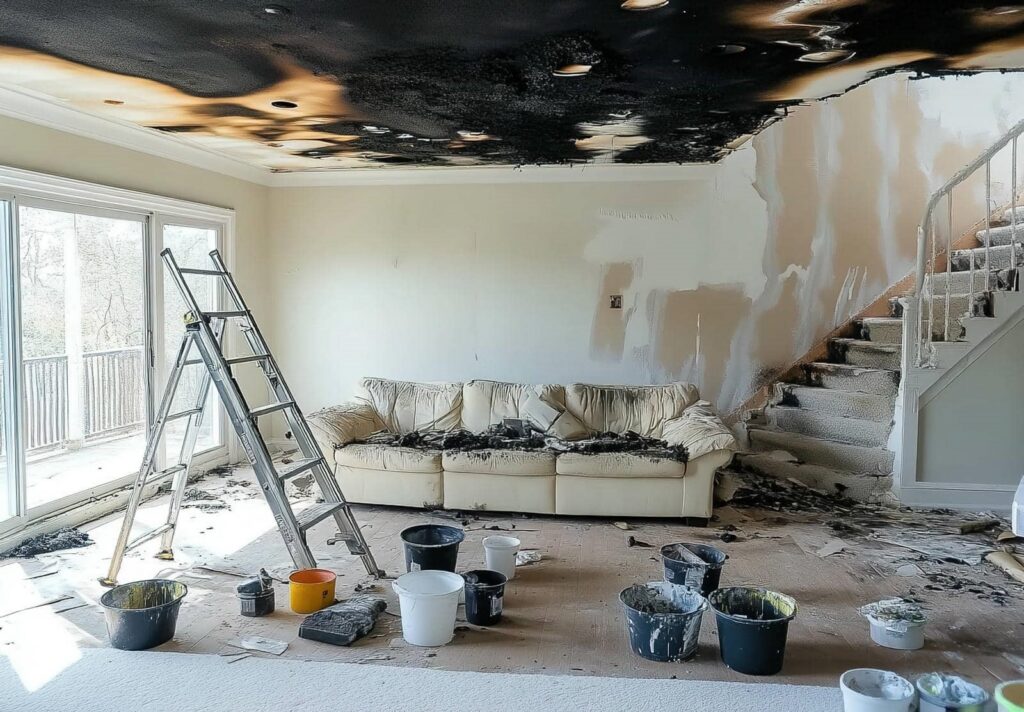
Evaluating fire and smoke damage requires a keen eye and a methodical approach. Start by conducting a thorough damage assessment of your property. Look for charred surfaces, discoloration, and signs of smoke infiltration. Document everything meticulously; this will support your insurance claims process later on.
Next, check structural elements, such as beams and walls, for integrity. Don’t overlook hidden areas, like behind appliances or inside cabinets, where damage may lurk.
As you assess, remember to prioritize safety—wear protective gear and avoid unstable structures. Your well-being is paramount.
Finally, take clear photographs of all damage to reinforce your claims. This step not only provides evidence but also helps you feel more in control during a challenging time.
Smoke Residue Analysis
After evaluating visible damage, it’s time to examine smoke residues, which can pose hidden risks to both health and property integrity.
Different smoke types—like wet, dry, and fuel oil—create varied residues that can affect surfaces and air quality. You should conduct residue testing to determine the specific composition and toxicity of the soot. This process helps in identifying the right cleaning methods and materials needed for effective restoration.
Keep in mind that lingering smoke particles can lead to health issues, so it’s essential to address them thoroughly.
Structural Integrity Evaluation
Evaluating structural integrity is essential once you’ve dealt with smoke residues, as fire can greatly compromise a building’s safety.
Begin with a thorough structural assessment to identify any visible signs of damage, such as cracks or warping. Next, conduct integrity testing on key components like beams and columns to gauge their strength and stability. This process often involves specialized equipment that measures load-bearing capacity.
Don’t underestimate the importance of consulting with professionals, as they bring expertise that ensures you’re not alone in this challenging time. Remember, your safety and peace of mind matter.
How Fire Damage Restoration Works?
In fire damage restoration, the process begins with a thorough assessment and inspection of the affected areas.
You’ll need to identify the extent of the damage, including structural concerns and smoke residues.
Once the evaluation is complete, specialized cleaning and restoration techniques come into play to restore your property effectively.
Assessment and Inspection Process
When a fire strikes, evaluating the damage is essential for effective restoration. Your first step involves a thorough fire assessment, where professionals examine the affected areas to identify structural integrity and potential hazards.
They’ll use various inspection methods, like thermal imaging and moisture detection, to uncover hidden damage that mightn’t be visible to the naked eye. This process ensures nothing is overlooked, allowing for an extensive understanding of the extent of the destruction.
It’s important to remain engaged during this phase, as it sets the foundation for all future restoration efforts. By understanding the full scope of damage, you’ll feel more empowered and informed as you move forward in the recovery process.
Cleaning and Restoration Techniques
Effective cleaning and restoration techniques are vital for returning your space to its pre-fire condition. Each step plays an important role in ensuring your environment feels like home again.
- Soot removal: Professionals use specialized equipment to eliminate soot from walls, ceilings, and furnishings, preventing further damage and health risks.
- Deodorization methods: Advanced techniques, like ozone treatment or thermal fogging, help neutralize lingering smoke odors, restoring comfort to your space.
- Surface cleaning: Deep cleaning of all surfaces, including carpets and upholstery, ensures that every trace of fire residue is addressed.
Key Tools and Techniques for Fire Damage Restoration
Fire damage restoration requires a range of specialized tools and techniques to effectively address the aftermath of a blaze. You’ll need restoration equipment like industrial-strength vacuums for soot removal and air scrubbers to improve indoor air quality.
Thermal imaging cameras help identify hidden hotspots, ensuring safety during the process. Dehumidifiers play an essential role in preventing mold growth, which can worsen damage.
It’s imperative to use protective gear to prioritize fire safety for everyone involved. Techniques like controlled demolition may be necessary to remove severely damaged materials, while thorough cleaning methods restore affected surfaces.
Finding the Right Fire Damage Restoration Experts
After addressing immediate fire damage with the right tools and techniques, the next step is finding skilled fire damage restoration experts. You want professionals who understand the complexities of restoration and can ease your worries during this challenging time.
Consider the following when choosing experts:
- Certification Requirements: Confirm they’re certified by reputable organizations, reflecting their expertise and commitment to quality.
- Insurance Considerations: Verify they work with your insurance provider to streamline the claims process and reduce your financial burden.
- Local Experience: Look for specialists with a solid track record in your area, as they’ll understand local building codes and regulations.
Frequently Asked Questions
How Long Does the Fire Damage Restoration Process Typically Take?
The fire damage restoration process typically takes days to weeks. You’ll need thorough smoke removal and soot cleaning to ensure your space feels safe and welcoming again. Every situation is unique, so timelines can vary.
Will My Insurance Cover Fire Damage Restoration Costs?
Your insurance policy often covers fire damage restoration costs, but it depends on the specifics. Initiate the claim process promptly, providing necessary documentation to ensure you receive the support you need during this challenging time.
What Are Common Hidden Dangers After a Fire?
After a fire, you’ll face hidden dangers like smoke residue, structural instability, hazardous materials, and electrical hazards. Plus, water damage from firefighting efforts can complicate recovery. Stay vigilant to ensure your safety and well-being.
Can I Stay in My Home During Restoration?
You shouldn’t stay in your home during restoration. Safety assessments often reveal hidden dangers. Consider temporary housing to ensure your well-being while professionals address the damage, allowing you to return safely when it’s fully restored.
How Can I Prevent Future Fire Damage?
To prevent future fire damage, prioritize fire safety by installing smoke detectors, maintaining clear escape routes, and practicing emergency preparedness through regular drills. You’re creating a safer home for yourself and your loved ones.
Final Thoughts
Addressing fire damage promptly is essential for your safety and property recovery. Many fire-related injuries happen when people try to extinguish flames themselves, highlighting the importance of relying on certified professionals who can handle restoration safely and effectively. By following the outlined steps and engaging experts, you restore your home and enhance your future fire safety measures. Remember, your well-being is the top priority.