When faced with water damage, it’s vital to act swiftly to prevent mold growth. You need to assess the damage and remove any standing water immediately. Thorough drying is necessary, as lingering moisture can lead to serious mold issues. Cleaning and disinfecting surfaces properly will also help. But how do you ensure you’ve covered all bases? Understanding the key steps can make a significant difference in your home’s recovery.
Key Takeaways
- Remove standing water immediately to reduce moisture levels and prevent mold growth.
- Thoroughly dry affected areas using fans and dehumidifiers to maintain low humidity.
- Clean and disinfect all surfaces with mold-killing solutions to eliminate potential spores.
- Regularly monitor for mold signs, such as discoloration or musty odors, in affected areas.
- Implement effective ventilation strategies to enhance air circulation and keep environments dry.
Assess Water Damage Quickly
When you face water damage, acting swiftly is essential to minimize mold growth. Begin by identifying the water sources, whether from a burst pipe, flooding, or leaks.
Next, conduct a thorough damage assessment. Look for affected areas, including walls, floors, and personal belongings. Pay close attention to hidden spaces like behind cabinets or under carpets, where moisture can linger unnoticed.
Document the extent of the damage, as this information will guide your next steps. Use moisture meters to measure dampness in materials and ensure you capture all affected areas.
Remove Water Damage Immediately
After evaluating the water damage, the next step is to remove any standing water immediately. Quick water extraction is essential to prevent mold growth and minimize further damage.
Use a wet/dry vacuum or a professional service to efficiently remove water. Don’t overlook hidden areas, such as under carpets or behind furniture, where moisture can linger.
Control moisture levels by using fans or dehumidifiers to enhance air circulation. This step hastens the drying process and helps maintain a safe environment.
Dry Out Affected Areas Thoroughly
After water damage, it’s vital you act quickly to remove standing water from affected areas.
Use fans and dehumidifiers to enhance airflow and reduce moisture levels effectively.
This thorough drying process is essential in preventing mold growth and ensuring a safe environment.
Remove Standing Water Immediately
Act quickly to remove standing water, as this is essential in preventing mold growth after water damage.
Proper water extraction and moisture control are key to safeguarding your home.
Follow these steps:
Identify the source: Locate where the water is coming from and stop it if possible.
Use pumps: Employ submersible pumps or wet vacs to extract standing water efficiently.
Clear debris: Remove any items that may hold moisture, including carpets and furniture.
Check hidden areas: Inspect crawl spaces and behind walls, as water can accumulate unnoticed.
Use Fans And Dehumidifiers
To effectively prevent mold growth, using fans and dehumidifiers is essential for thoroughly drying out affected areas.
Start by strategically placing fans to enhance airflow, directing them towards the wet spots. This circulation helps evaporate moisture more quickly.
Make sure your dehumidifier settings are ideal; aim for a humidity level below 60%. Monitor the device regularly, emptying the reservoir as needed to maintain its efficiency.
Combining these methods creates a balanced environment that discourages mold development.
Remember to keep doors and windows closed while you dry the area, maximizing the effectiveness of your equipment.
Clean and Disinfect Surfaces Properly
Cleaning and disinfecting surfaces properly is essential in preventing mold growth after water damage. You want to adopt effective mold prevention strategies to keep your environment safe.
Here are some disinfecting techniques to follow:
Use a Mold-Killing Solution: Opt for a mix of water and vinegar or a commercial mold remover.
Scrub Surfaces Thoroughly: Make certain you remove all dirt and debris; mold thrives in hidden spots.
Rinse with Clean Water: After scrubbing, rinse surfaces to eliminate any remaining solution.
Dry Completely: Use fans or towels to dry surfaces quickly, as moisture encourages mold development.
Watch for Mold Growth
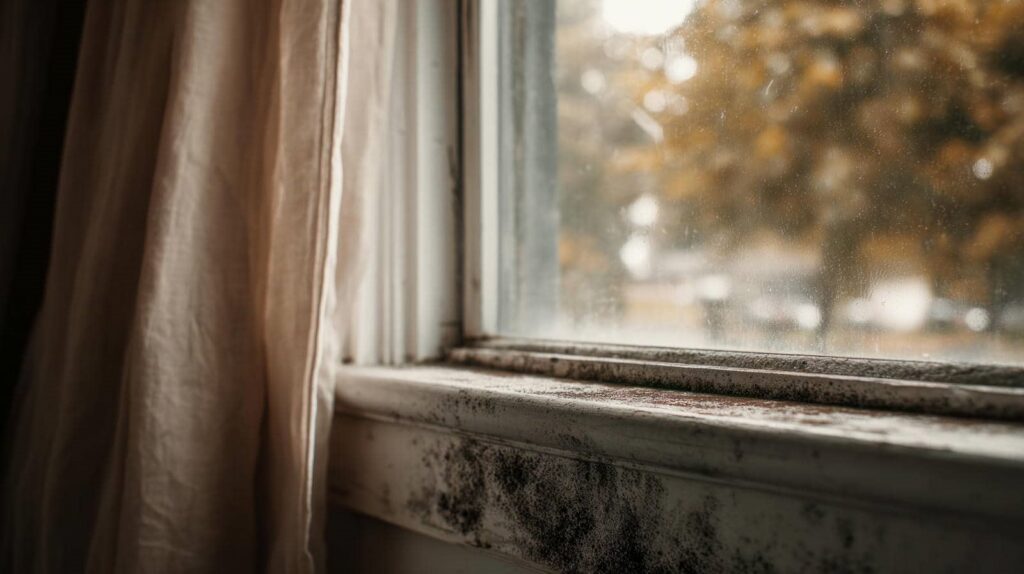
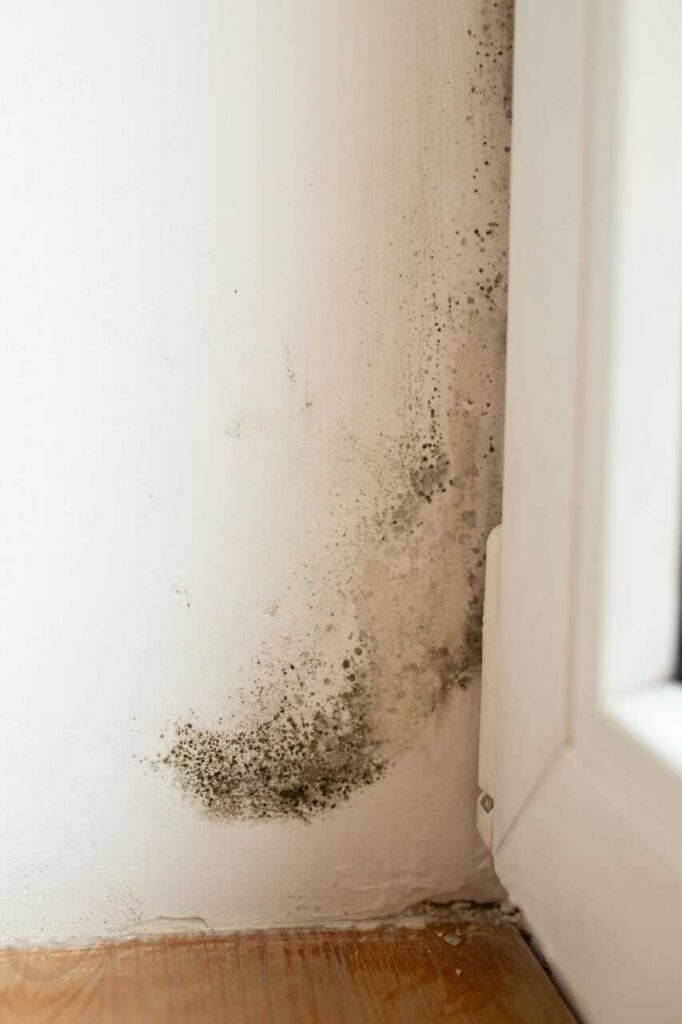
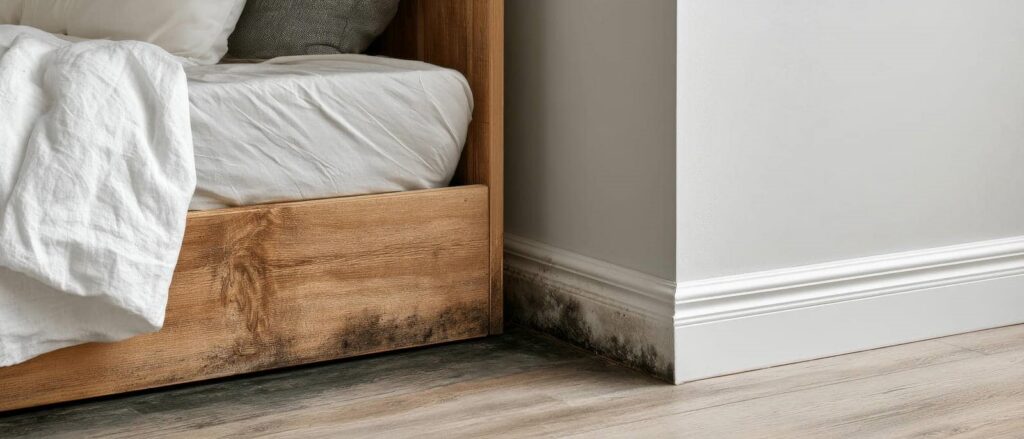
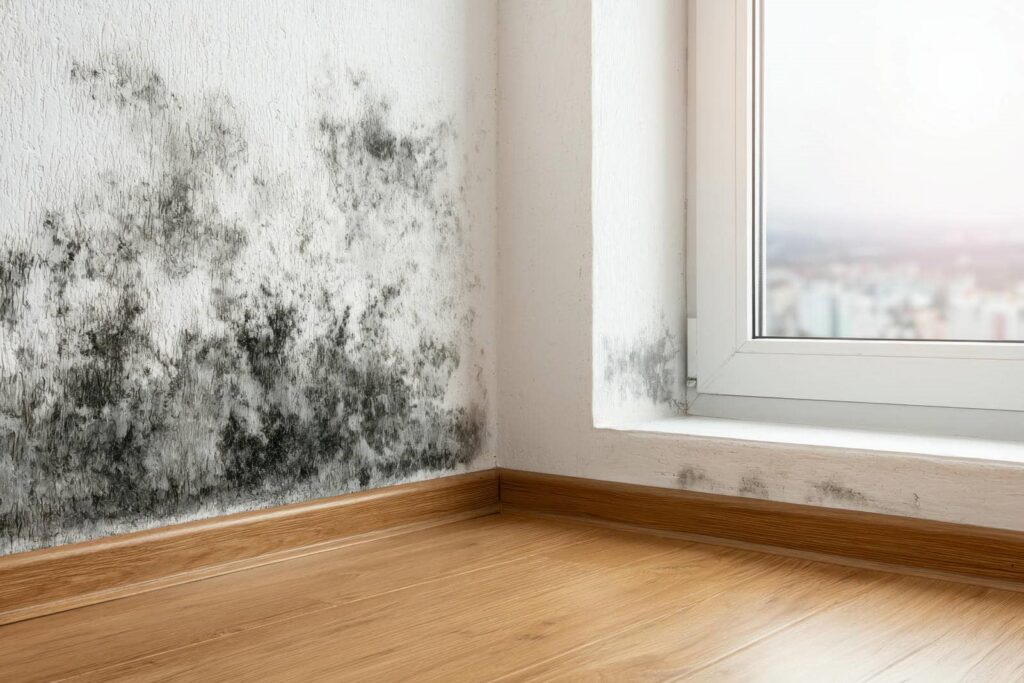
After water damage, it’s vital to watch for mold growth indicators like musty odors or visible spots.
Mold thrives in damp, warm environments, so monitoring humidity levels and moisture sources is essential.
Common Mold Indicators
Mold can silently invade your space, making it essential to recognize its common indicators.
Being aware of these signs helps you protect your home and health from various mold types and their associated health risks.
Here are four key indicators to watch for:
Visible Growth: Look for dark spots on walls, ceilings, or floors.
Musty Odor: A persistent, earthy smell can signal mold presence.
Water Damage: Check for discoloration or peeling paint, which may indicate moisture.
Allergy Symptoms: Unexplained sneezing, coughing, or skin irritations can point to mold-related issues.
Ideal Growth Conditions
Understanding the conditions that promote mold growth is essential for effective prevention. Mold thrives in environments with moisture, warmth, and organic materials. When water damage occurs, these growth factors often align, creating a perfect breeding ground for mold.
To combat this, keep indoor humidity below 60% and ensure proper ventilation in all areas, especially basements and bathrooms. Regularly inspect hidden spaces, like behind appliances, where moisture can accumulate unnoticed.
Using mold-resistant products can also enhance your mold prevention efforts. Remember, acting quickly to dry out wet materials and maintaining a clean environment greatly reduces the risk of mold taking hold.
Why Fast Drying Matters?
When water damage occurs, quick drying is essential to prevent further complications. Timely action helps you manage moisture control and enhance air circulation, both vital for inhibiting mold growth.
Here are four reasons why fast drying matters:
Reduces Mold Risk: Mold thrives in damp environments; drying quickly minimizes its ability to take hold.
Protects Structures: Quick drying helps preserve your property’s integrity, preventing long-term damage.
Improves Air Quality: Proper air circulation during drying reduces allergens and irritants, promoting a healthier living space.
Saves Time and Money: Addressing water damage swiftly can lower repair costs and shorten restoration timelines.
Seek Professional Help When Necessary
While tackling water damage on your own might seem manageable, seeking professional help often proves vital for effective recovery.
Water damage can lead to mold growth within 24 to 48 hours, making prompt action essential. Professional services specialize in extensive mold prevention, utilizing advanced techniques and equipment that you may not have access to.
They can assess the extent of the damage, ensuring all affected areas are properly dried and treated. Additionally, experts can identify hidden moisture pockets that might go unnoticed, reducing the risk of future mold issues.
By enlisting professionals, you safeguard your home and well-being, ensuring a thorough restoration process that DIY efforts might miss.
Isn’t it worth investing in peace of mind during such a stressful time?
Frequently Asked Questions
How Can I Tell if Mold Is Present After Water Damage?
To detect mold after water damage, use mold detection methods like visual inspections and odor checks. Employ moisture assessment techniques, such as humidity readings and moisture meters, to identify damp areas that may harbor mold growth.
What Materials Are Most Vulnerable to Mold Growth?
Wood, drywall, and carpet are most vulnerable to mold growth. Using mold-resistant materials and ensuring moisture control can help you create a healthier environment, fostering a sense of belonging and safety in your space.
Can I Use Bleach to Kill Mold?
You can use bleach for mold removal techniques, but its effectiveness varies. It only kills surface mold and can’t penetrate porous materials. Consider alternative methods for deeper, more thorough mold removal to ensure lasting results.
How Long Does It Take for Mold to Develop?
Mold can start developing within 24 to 48 hours after water damage. By understanding the mold growth timeline, you can prioritize water damage prevention, ensuring your space remains healthy and welcoming for everyone.
Is Mold Remediation Covered by Homeowners Insurance?
Yes, mold remediation’s often covered by homeowners insurance, but you should check your policy for specific coverage limits. Filing insurance claims promptly can help ensure you receive the support you need for effective remediation.
Wrap-Up
In your battle against mold after water damage, remember that time is of the essence. Just as a knight wouldn’t delay in sharpening their sword before a fight, you shouldn’t hesitate to act swiftly. By promptly evaluating and addressing the situation, you create a fortress against mold’s sneaky invasion. Keep vigilance in monitoring for signs of growth, and you’ll ensure your space remains a healthy sanctuary. Don’t let mold win; take charge and protect your home.