Imagine a submerged shipwreck, where hidden treasures and dangers lie beneath the surface. Similarly, evaluating water damage requires a meticulous approach to uncover both visible and concealed issues. You need to identify the source, gauge the extent, and utilize specialized tools for a thorough analysis. The process isn’t just about observation; it’s about understanding the risks that lurk out of sight. What steps should you take to ensure nothing is overlooked?
Key Takeaways
- Identify the source of water damage to effectively target remediation efforts and prevent further issues.
- Use moisture meters and infrared cameras for accurate detection of hidden moisture behind walls and ceilings.
- Document all damage thoroughly, including photos and detailed descriptions, to support insurance claims and restoration plans.
- Assess the structural integrity of affected materials to gauge safety and inform repair options.
- Regularly check for mold growth in damp areas, as it can escalate quickly and pose health risks.
Understanding Different Types of Water Damage
When you encounter water damage, understanding its types is essential for effective remediation.
Flood damage often results from natural disasters, leading to extensive issues like mold growth and compromised structural integrity. On the other hand, plumbing issues can cause localized damage, requiring different remediation techniques.
It’s important to identify whether the water is clean, gray, or black, as this classification affects your approach. Clean water can often be managed with basic drying methods, while gray and black water necessitate more rigorous interventions.
When filing insurance claims, accurately documenting the type of damage is critical for coverage. By grasping these distinctions, you’ll be better equipped to tackle the challenges that arise during the water damage assessment process.
Evaluating Water Damage: A Step-by-Step Approach
After identifying the type of water damage, the next step involves a detailed evaluation to determine the extent and severity of the issue.
Start by pinpointing the water source; this is essential for addressing the problem effectively. Document the damage timeline to assess how long the area has been affected.
Evaluate restoration costs and consider repair options while keeping safety precautions in mind. Check for mold risks, as these can escalate quickly and compromise your health.
Additionally, assess the structural integrity of affected materials, as this can influence insurance claims.
How to Spot Hidden Water Damage?
How can you uncover hidden water damage before it worsens? Start by inspecting areas prone to leaky pipes, like under sinks and behind appliances.
Look for wall discoloration or ceiling stains, which often indicate hidden moisture. Check your insulation; damp insulation can signal water intrusion.
Flooring issues, such as warping or buckling, may also hint at underlying problems. Don’t ignore musty odors, as they can point to mold growth hiding in unseen corners.
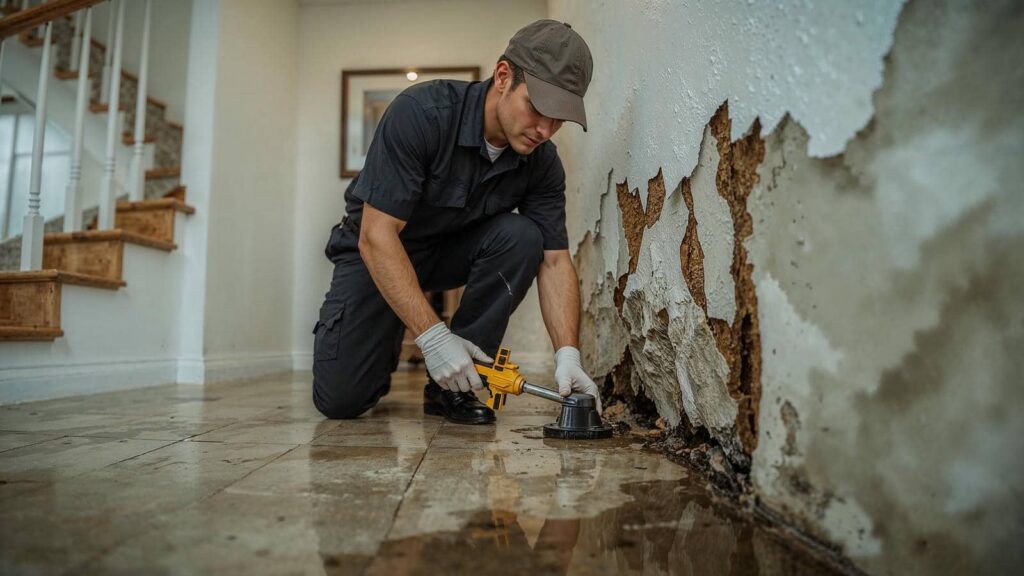
Use a moisture meter for precise readings in suspicious areas. By being proactive and vigilant, you can identify these signs early, preventing extensive damage and costly repairs.
Your home deserves that care.
Key Tools for Water Damage Assessment
Identifying hidden water damage often leads you to the need for reliable tools to assess the extent of the issue.
Here are three essential tools that can enhance your assessment capabilities:
Moisture Meters: These devices accurately measure moisture levels in various materials, helping you pinpoint areas affected by water damage.
Infrared Cameras: Utilizing thermal imaging, these cameras detect temperature variations that indicate moisture presence behind walls and ceilings, revealing hidden leaks.
Borescopes: These flexible cameras allow you to inspect tight spaces, giving you a visual confirmation of water intrusion in hard-to-reach areas.
Using these tools effectively can ensure you thoroughly assess water damage and take appropriate action.
Being equipped with the right technology fosters confidence in your ability to tackle these issues.
Documenting Your Water Damage Findings
When evaluating water damage, documenting your findings is essential, as it provides a clear record that can guide remediation efforts and insurance claims.
Start by creating a detailed damage inventory, listing all affected areas and materials. Use photo documentation to capture the extent of the damage; clear, well-lit images can serve as irrefutable evidence.
Make certain to note the date and time of each photograph, and include close-ups of critical issues like mold growth or structural damage.
This organized approach facilitates communication with restoration professionals and strengthens your position with insurance providers.
Effective documentation ensures you’re prepared, informed, and supported throughout the remediation process, fostering a sense of belonging in the community of homeowners facing similar challenges.
Frequently Asked Questions
How Does Water Damage Affect Property Insurance Claims?
Water damage greatly impacts your property insurance claims. It can complicate the claim process, affecting your insurance coverage. Understanding your policy’s terms and documenting damages thoroughly ensures you maximize your potential compensation and streamline your experience.
What Health Risks Are Associated With Water Damage?
Imagine a hidden forest; water damage invites mold growth that silently gnaws at structural integrity. You might face health symptoms like respiratory issues, and the long-term effects could haunt you and your loved ones.
Can I Handle Water Damage Assessment Myself?
You can attempt a DIY assessment, but a professional evaluation often uncovers hidden issues. Your skills may not detect mold or structural damage, so collaborating with experts ensures a thorough understanding and effective resolution.
How Long Does Water Damage Remediation Take?
Water damage remediation typically takes 3 to 7 days, depending on drying techniques used and the extent of damage. Restoration timelines can vary, but prompt action ensures quicker recovery and minimizes long-term issues.
What Costs Are Involved in Water Damage Restoration?
Restoration costs involve damage evaluation, equipment rental, labor fees, and material replacement. You’ll also encounter potential hidden damage assessments, which can escalate expenses. Understanding these elements helps you budget effectively and prepare for restoration.
Summary
In evaluating water damage, you’ll often find that the tools you choose coincide perfectly with the hidden issues you uncover. By using moisture meters and infrared cameras, you detect concealed moisture and anticipate potential mold growth. This proactive approach ensures you address all aspects of the damage, reinforcing your claims with insurers. Ultimately, thorough documentation and a systematic evaluation lead to effective restoration, aligning your findings with the necessary actions for recovery.